
Cowley County Criminal Court Records
A criminal court record is the case file kept by the Clerk of the District Court after the State files a criminal matter. In Cowley County, criminal cases are heard in District Court in both Winfield and Arkansas City, with jury trials centered in Winfield. Docket examples show CR case numbers and events such as First Appearance, Arraignment, Preliminary Examination, Sentencing, Disposition, Status Conference, and Trial-PV.
The court record is broader than a charge listing. It can include the complaint, filed charges, bond, appearances, attorney information, motions, plea, diversion agreement, conviction or dismissal, sentence, probation, restitution, fines, and docket history. For closer treatment of filed accusations after arrest, use Cowley County court charge records. For the full cross-category court search process, use Cowley County court records.
The manifest image from the Cowley County Attorney page connects criminal court records to the local prosecuting office, speed-reduction material, and diversion resources.
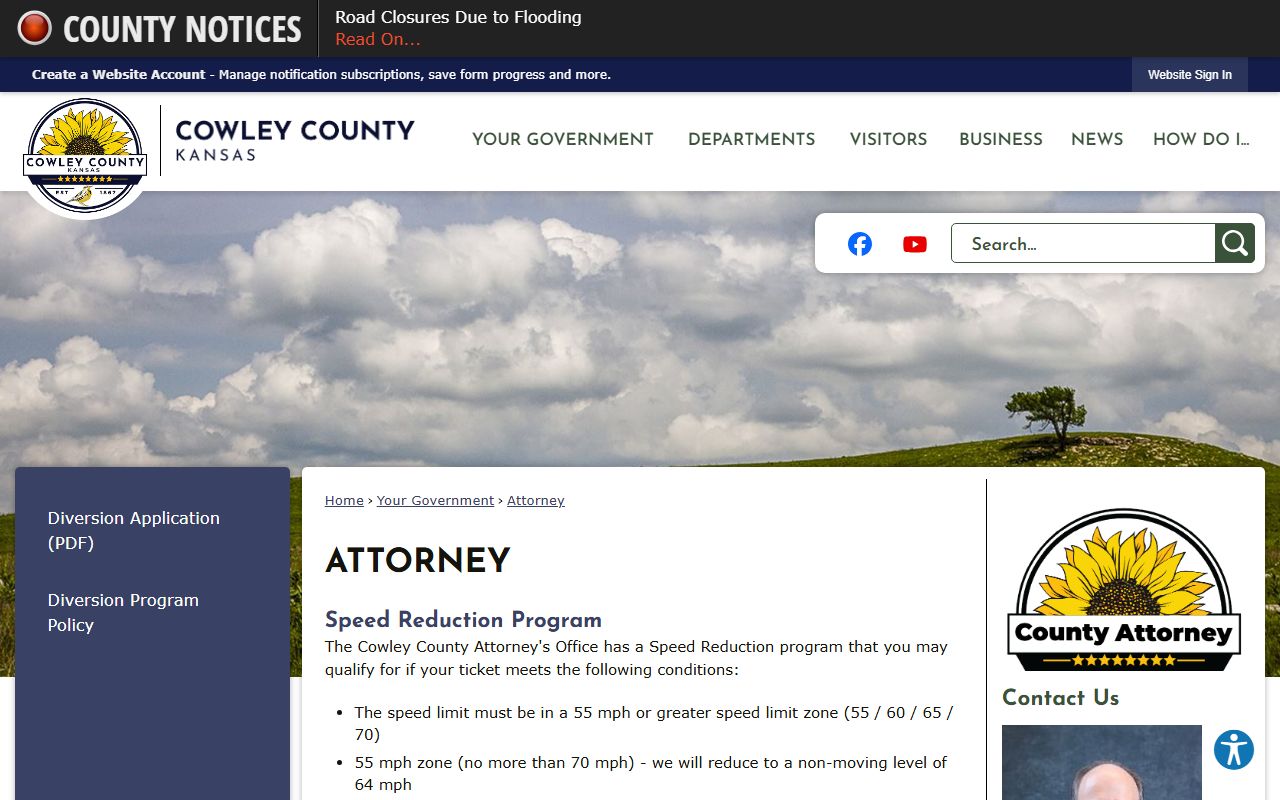
The County Attorney is the prosecutor for District Court criminal matters, while the Clerk of the District Court is the case-record custodian.
Search Cowley County Criminal Cases
Use Kansas District Court CaseSearch as the online starting point for public criminal case information. Cowley County criminal examples use CR case numbers, and the portal can search by case number, party name, business name, citation, or other criteria. The county's local docket PDFs help with hearing dates, while public terminals at the Winfield and Arkansas City clerk offices provide no-fee courthouse access.
- Search CaseSearch by case number when known, because the number can identify the county location, year, and criminal case category.
- Search by defendant name when the case number is unknown, then confirm the year, court, event type, and party role before relying on a result.
- Check Cowley County docket PDFs for next hearing dates, event type, judge, prosecutor, defense counsel, and sealed placeholders.
- Use public terminals at the District Court clerk offices when online records do not show enough detail.
- Request copies in writing from the Clerk of the District Court when a complaint, order, sentencing entry, certified copy, or older document is needed.
The clerk charges a $12 search fee and $0.50 per page for copies. Criminal filing costs listed by Cowley County include felony criminal at $193 total, misdemeanor criminal at $158 total, and murder or manslaughter at $202.50 total. Those amounts are court fee items from the county fee schedule, not a promise that every criminal record can be obtained online.
Cowley County Criminal Case Flow
Criminal court records build in stages. A case may start with a complaint or other charging document, then move through first appearance, arraignment, preliminary proceedings where applicable, pretrial motions, plea or trial, disposition, and sentencing. Diversion can interrupt that path if the prosecutor and defendant enter an agreement that suspends prosecution while conditions are completed.
Case flow: Charges Filed › First Appearance › Arraignment › Pretrial / Motions › Plea or Trial › Disposition › Sentencing
| Stage | What Happens |
|---|---|
| Charges filed | The State opens the criminal court case through a complaint, information, or other charging document. |
| First appearance | The defendant appears before the court and bond, counsel, and next settings may be addressed. |
| Arraignment | Charges are read or acknowledged, and a plea is entered. |
| Pretrial / motions | Parties file motions, address discovery, set hearings, or prepare for plea or trial. |
| Plea or trial | The case resolves by plea, diversion path, dismissal, trial, or other court action. |
| Disposition | The court record states the current or final outcome for the charge or case. |
| Sentencing | The court imposes punishment, probation, fines, costs, restitution, or other conditions after conviction. |
The manifest image from the Cowley County diversion policy shows one local path that can affect the final criminal court record.
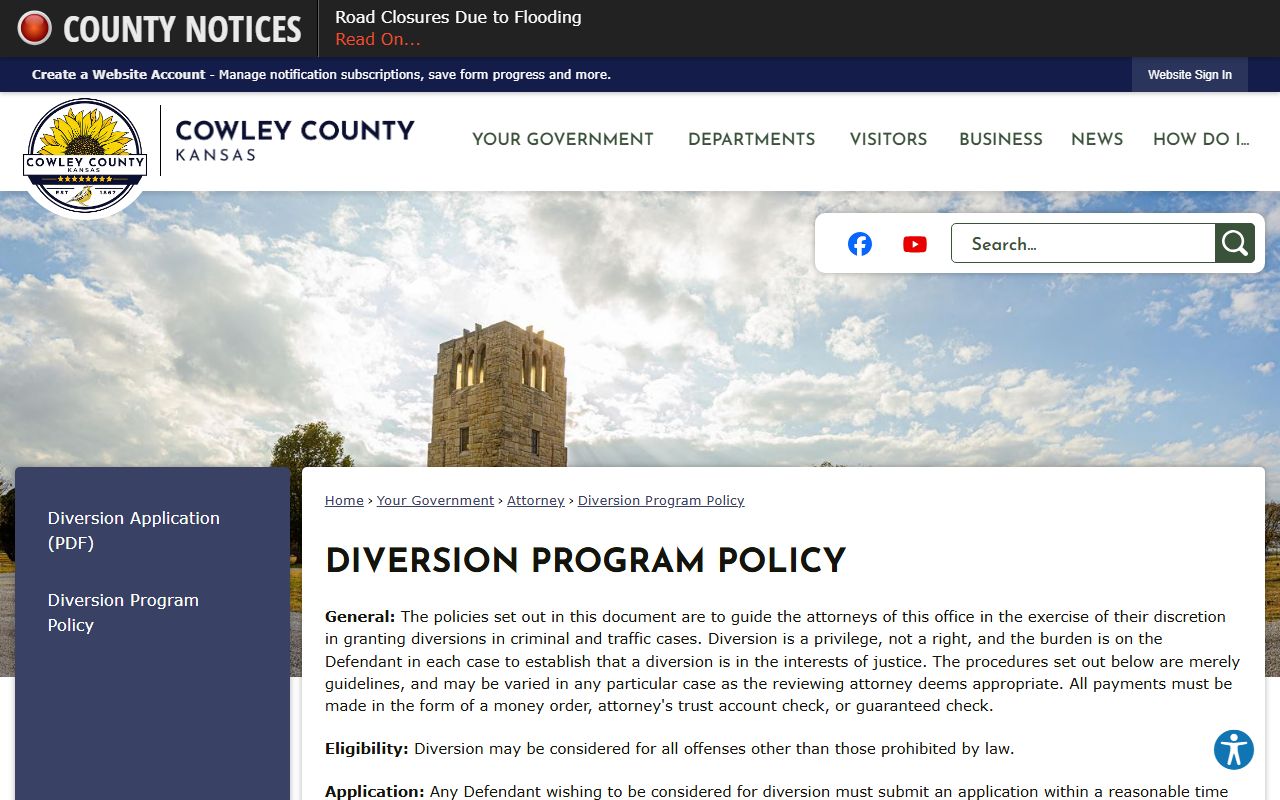
Successful diversion can lead to dismissal with prejudice, while a breach can restart prosecution and add more docket events to the criminal case file.
Cowley County Criminal Record Fields
Cowley County criminal court records combine the public docket line with case-file information. Docket examples show prosecutor and defendant connections, attorney names, event types, judges, dates, and sealed placeholders. The full file may include charging documents, bond orders, motions, diversion agreements, probation orders, sentencing journal entries, and financial obligations.
| Field | What It Shows |
|---|---|
| Case number | Unique identifier, with observed criminal examples using CR in the Cowley District Court number. |
| Defendant | The person accused in the State of Kansas criminal case, unless sealed or restricted. |
| Prosecutor | State of Kansas and the Cowley County Attorney's Office or named prosecutor. |
| Charges | Filed accusations, statutes or offense descriptions, and any amendments shown in public records. |
| Bond or warrant | Release terms, bond references, bench warrant, capias, failure-to-appear, or custody-related entries where public. |
| Hearing event | First Appearance, Arraignment, Preliminary Examination, Status Conference, Disposition, Trial-PV, or Sentencing. |
| Plea | Not guilty, guilty, no contest if used, or other plea-related docket event. |
| Disposition | Convicted, dismissed, diverted, acquitted, amended, or other current or final outcome. |
| Sentence | Jail, prison, probation, fines, costs, restitution, treatment, or other court-ordered terms after conviction. |
| Redaction status | Sealed, confidential, juvenile, expunged, or otherwise withheld information. |
Cowley County Charges vs Convictions
A charge is an accusation filed in court. A conviction is an outcome after a guilty plea, verdict, or other adjudication that results in guilt. Cowley County criminal court records may show charges that were reduced, amended, dismissed, diverted, or resolved without conviction. Reading only the charge line can give the wrong impression of the final result.
| Point | Charge | Conviction |
|---|---|---|
| Meaning | The State alleges an offense. | The court has a guilty outcome by plea or verdict. |
| Timing | Appears near the start of the criminal case. | Appears after plea, trial, or final adjudication. |
| Record clue | Complaint, information, charge line, bond, or arraignment. | Disposition, sentencing entry, probation order, fines, or restitution. |
| Possible change | May be amended, reduced, dropped, dismissed, or diverted. | May later be appealed, set aside, or expunged if eligible. |
The Cowley County jail roster can show booking or offense information before final court disposition, but the District Court criminal case is the authoritative source for filed charges and the court outcome.
Dispositions and Sentences
Disposition means the current or final outcome of a criminal charge or case. Cowley docket examples include Disposition and Sentencing as separate event types, which means the docket can show both a resolution setting and the later punishment phase. A case may also show status conferences or trial-related entries before the outcome is final.
Sentencing fields may include jail or prison terms, probation, fines, costs, restitution, treatment, community service, or other conditions. Financial fields can also include docket fees, surcharges, bond, and costs. If the defendant entered diversion, the record may show a diversion agreement and later dismissal if the agreement was completed. Cowley County Attorney policy states that successful diversion dismisses the case with prejudice, while breach can lead to revocation and resumed prosecution.
The manifest image from the Kansas Department of Corrections reflects the state-level custody and supervision system that may become relevant after sentencing, but DOC records are not the same as Cowley County criminal court records.

A District Court sentencing entry explains the court outcome; a DOC record may later show prison, supervision, or custody status for eligible state offenders.
Sealed vs Expunged Records
Cowley County criminal court records can be restricted because of juvenile law, sealed court orders, expungement, or confidential case categories. The county docket PDFs show sealed matters with asterisks or sealed placeholders instead of normal names. That is a public access limit, not a statement that the court lacks the underlying file.
| Point | Sealed | Expunged |
|---|---|---|
| Public view | Hidden from ordinary public access by law or court order. | Public access is limited after the court grants eligible relief. |
| Cowley clue | Dockets may show sealed placeholders and omit litigant names. | The fee schedule lists conviction expungement and arrest expungement at $195 each. |
| Kansas authority | May arise from confidentiality statutes or case-specific orders. | K.S.A. 21-6614 covers conviction and diversion expungement; K.S.A. 22-2410 covers arrest expungement. |
| Effect | Record still exists but is not open to ordinary public inspection. | Record access is restricted, but some agencies and legally authorized users may still see it. |
Note: Expungement limits public access in Kansas, but it is not the same as physical destruction of every record.
Cowley County Criminal Record Access
Kansas public access starts with the open-record policy in K.S.A. 45-216 through 45-220, but criminal court records are also controlled by court rules, case-specific orders, and confidentiality laws. Cowley County's practical route is straightforward: search CaseSearch, use no-fee public terminals in Winfield or Arkansas City, check docket PDFs for hearing dates, and request copies in writing from the Clerk of the District Court.
Kansas Supreme Court Rule 123 cover sheets are linked by Cowley County for new cases, and the court page directs record copy requests to the district court clerk's office. Juvenile, child-in-need-of-care, sealed, expunged, mental health, and minor-identifying information may not be open. Docket lines should be treated as leads until the record is verified through the court source.
The manifest image from the Kansas statute article used in the research is part of the statute-source set for court fees and records.
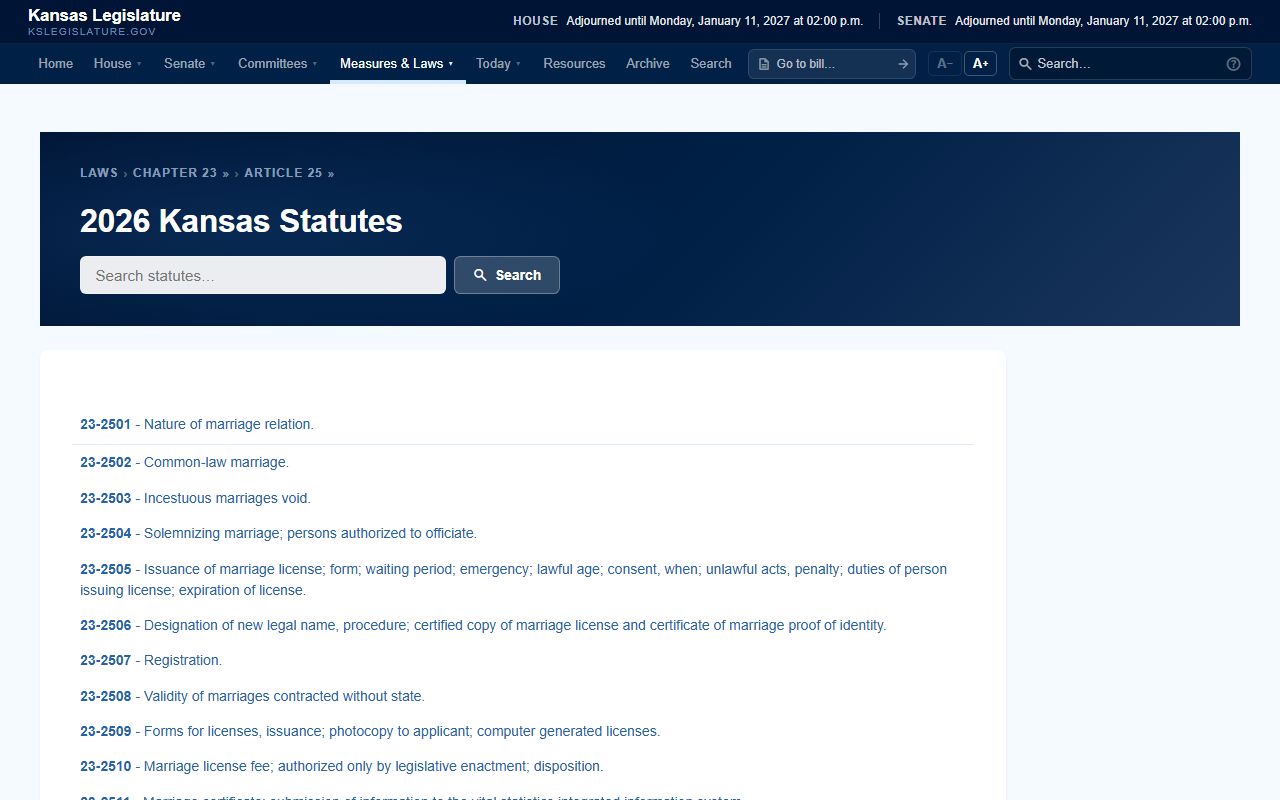
Statute sources are useful for confirming legal authority, while the Cowley County court file remains the source for case-specific facts.
Cowley County Attorney Records
The prosecuting office is the Cowley County Attorney, not a district attorney. The official page lists County Attorney Larry Schwartz, Winfield and Arkansas City office locations, and the main phone numbers 620-221-5485 and 620-441-4540. Prosecutor information can appear in criminal court records as State of Kansas, Cowley County Attorney's Office, or named prosecutors on docket entries.
The County Attorney diversion policy says diversion may be considered for offenses not prohibited by law. It is a privilege, not a right, and applications must be submitted within a reasonable time after initial appearance. The application fee is $50 payable to the Cowley County Treasurer, and drug or alcohol offenses require a drug and alcohol evaluation before attorney review plus a $150 evaluation fee payable to Heartstone.
| Diversion Factor | Record Impact |
|---|---|
| Application and review | The docket may continue while the prosecutor considers eligibility and terms. |
| Agreement terms | The record may reflect waived trial rights, stipulation of facts, reporting, fees, treatment, restitution, or service. |
| Successful completion | The County Attorney policy states the case is dismissed with prejudice. |
| Breach | Revocation can restart prosecution and create more criminal docket entries. |
The manifest image from the Cowley County Attorney directory supports the local prosecutor contact details behind Cowley County criminal court records.
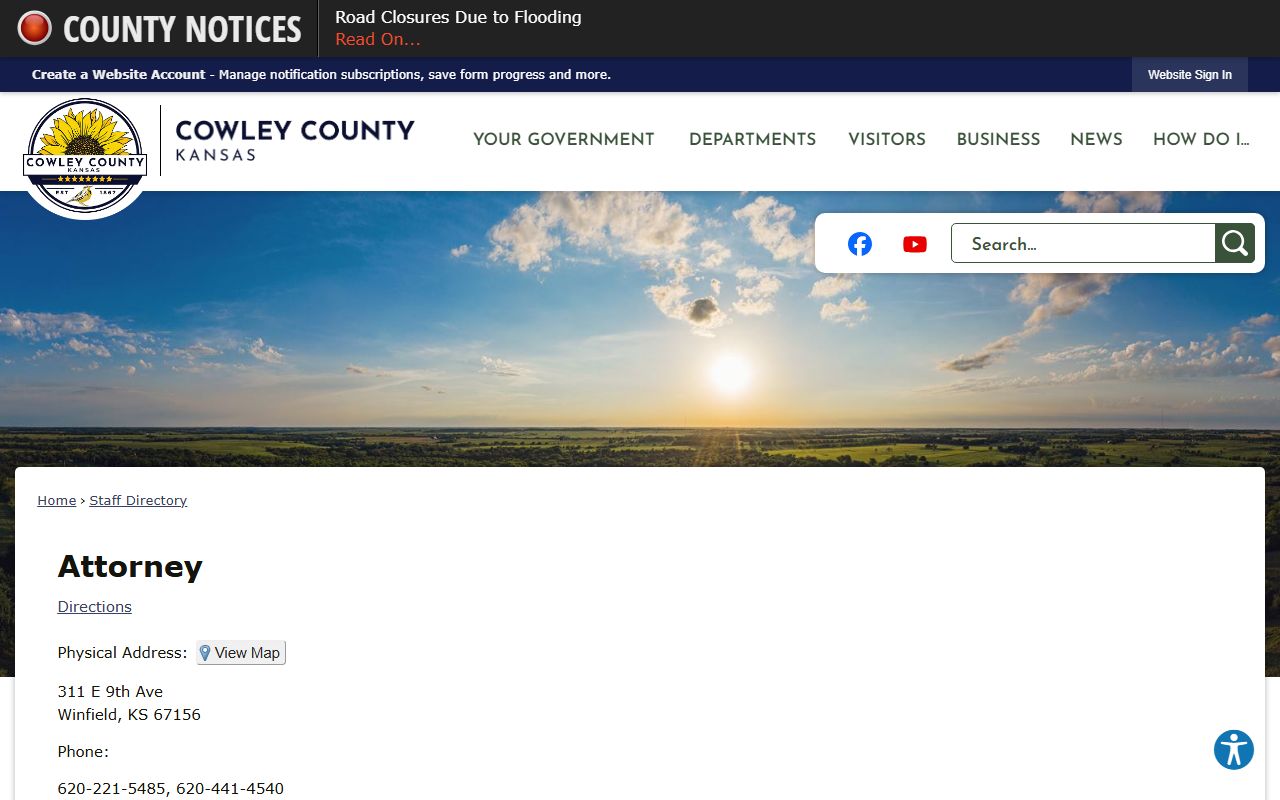
Prosecutor records and court records overlap in criminal matters, but official case copies and certified dispositions remain a Clerk of the District Court function.
Restricted Cowley County Criminal Records
Restricted criminal court records include juvenile offender matters, child-in-need-of-care cases, sealed cases, expunged cases, mental health or care and treatment matters, and records with protected personal identifiers. Public copies may redact Social Security numbers, financial account numbers, minor names, and other sensitive details. The absence of a name from a public docket can mean confidentiality, not absence of court activity.
Appointed counsel and indigent defense are handled through the court and Kansas appointment process. The research did not identify a county-specific public defender office for Cowley County, so defendants needing counsel should raise that issue in the District Court case rather than relying on an unverified local office listing. For warrants tied to criminal cases, the docket may show a bench warrant or failure-to-appear event, but warrant status should be verified through the court or sheriff channel.